
South African President Cyril Ramaphosa on Friday described BRICS as an important global forum, highlighting the grouping's growing demographic and economic weight and noting that its members account for around half of the world's population and 40 percent of global GDP.

Infosys Chairman Nandan Nilekani stressed the need for India to develop population-scale tokenisation infrastructure capable of handling billions of transactions, rather than merely focusing on issuing tokens. He highlighted the importance of interoperability, liquidity, and high volumes for tokenisation to expand across various asset classes and use cases.

How well is your country's healthcare system staffed? We compare the density of essential healthcare professionals across countries, based on figures from World Population Review.

SBSP chief Om Prakash Rajbhar has revived the long-standing discussion about dividing Uttar Pradesh, claiming Prime Minister Narendra Modi assured him the state could be split into four parts after a caste census. Rajbhar's statement, made at a rally in Deoria, links the division to the 27% reservation issue and suggests a Rajbhar could become chief minister of a new Purvanchal state. The demand for UP's division has historical precedents, notably from former Chief Minister Mayawati.

Opposition MPs have voiced strong concerns regarding the government's decision to levy a 0.4 per cent fee on UPI payments above Rs 2,000 made to merchants, effective October 15. They argue that this "anti-people" move will negatively impact a large segment of the population, despite the finance ministry clarifying that the charge is on the merchant ecosystem and not directly on customers for P2P or small payments.

A new study projects that by 2100, only 38% of the world's population will reside in large cities, a significant reduction from previous estimates. This revised projection is based on a newly discovered urban life cycle, where the growth rate of large cities slows down as countries become more urbanised, contrasting with the rapid growth seen in less urbanised regions. The research highlights the importance of understanding these dynamics for future infrastructure and climate adaptation planning.

Italian Prime Minister Giorgia Meloni has announced a series of significant educational reforms, including a proposed ban on face coverings like burqas and niqabs in schools, a legal cap on the number of foreign students per classroom, and a requirement for parents of foreign students with integration issues to learn Italian. Meloni stated these measures aim to ensure immigrants learn Italian language and culture, and respect national rules, emphasising gender equality as non-negotiable. Additionally, she revealed plans to scrap the multiple-choice entrance test for medical school admissions.

From four nations to a powerful 11-member bloc, here's how BRICS reshaped the global order in 27 years.
India's Monsoon session of Parliament remains formally unprorogued 40 days after adjournment, setting a new record. This unusual delay fuels speculation that the government intends to introduce a key legislation, possibly an amendment to the women's reservation law, without convening a new session. The proposed amendment aims for a 50 per cent seat expansion to address concerns over delimitation.

Sports Minister Mansukh Mandaviya met World Aquatics president Husain Al-Musallam to discuss strengthening cooperation, developing aquatic sports in India, and exploring India's readiness to host Asian-level championships. India is also targeting to host the 2038 Asian Games and 2036 Olympics.

Southern chief ministers fear population stabilisation could reduce their parliamentary representation and tax devolution benefits.
Karnataka Chief Minister D K Shivakumar lauded KEONICS' initiative to provide AI-based KEO computers to rural children, marking the institution's golden jubilee. The KEO computers, developed in Karnataka, aim to bridge the digital divide. Shivakumar also highlighted government efforts to promote IT beyond Bengaluru, enhance industry-oriented skills, and digitise property records, emphasising the state's commitment to technology and skill development.
Union Education Minister Pralhad Joshi announced that revised NCERT textbooks for classes 10 to 12 are being prepared in "mission mode," while textbooks for classes 1 to 9 under the new National Curriculum Framework have already been released. He emphasised NCERT's role in building a 'Viksit Bharat' and highlighted the need for curricula to evolve with AI advancements and the importance of India's young population as a global asset.
Scientists have discovered a rare leafless orchid species, Gastrodia keyiensis, in a remote gorge along the Keyi River in Arunachal Pradesh. This elusive orchid, which lacks leaves and chlorophyll, relies on soil fungi for nutrients and was found at an altitude of around 1,000 metres. The discovery highlights the rich biodiversity of Arunachal Pradesh and the need for conservation.


Union Communications Minister Jyotiraditya Scindia announced India's ambition to lead the world in 6G mobile technology and become a designer of global technology standards. Speaking at the Global Fintech Fest 2026, Scindia highlighted India's shift from being a technology market to a technology maker, emphasizing progress in 5G rollout, affordable data, and digital infrastructure driving fintech growth, while also stressing the importance of digital security.

The prominence of migration highlights a longstanding problem for India's electoral system.
BSP chief Mayawati has criticised the Centre's decision to introduce a 0.4 per cent fee on UPI merchant transactions exceeding Rs 2,000, effective October 15. She termed it a "capitalist profiteering attitude" that burdens the common people, while the government clarified that the charge is on merchants and not customers for person-to-person transactions.
A new study from Stanford University suggests the human brain may have evolved as two independent organs, challenging the long-held belief of a single progenitor cell. Researchers found two parallel nervous systems developing without intersection, which could explain difficulties in growing hindbrain neurons in labs and open new avenues for treating neurological diseases.

State-run Punjab National Bank (PNB) is strategically planning to enter the wealth management segment by early 2027 and significantly expand its credit card portfolio, aiming to tap into lucrative markets largely dominated by private-sector banks.

As the world's most populous country, India's economy looks large in the aggregate even as its average incomes stay modest.

RBI Deputy Governor S C Murmu stated that the introduction of merchant discount rate (MDR) on UPI transactions is unlikely to cause a shift back to cash, despite some concerns, emphasising that MDR will help the payments ecosystem recover costs.
Scientists are stunned by the discovery of a nine-million-year-old capybara tooth fossil in Chile's Atacama Desert, a region currently devoid of capybaras. This finding not only marks the oldest record of the semi-aquatic rodent in coastal Chile but also significantly challenges the long-standing scientific view that the Atacama Desert has been continuously dry for 40 million years, suggesting a much wetter past.

Manipur Home Minister Govindas Konthoujam informed the assembly that 306 people have been killed and 49 are still missing in the ethnic violence that began in May 2023. The conflict between Meitei and Kuki-Zo communities, sparked by a protest over Scheduled Tribes status, led to President's rule and subsequent political changes in the state.

Chinese President Xi Jinping's upcoming visit to India for the BRICS summit is a pivotal diplomatic event poised to significantly impact bilateral ties and global cooperation amidst ongoing international instability.

A senior coach from India's shooting contingent for the Aichi-Nagoya Asian Games has voiced disappointment over the logistical arrangements, particularly the long travel times to the training venue.

India is hosting the 18th BRICS Summit in New Delhi, bringing together numerous world leaders including presidents from China, Russia, South Africa, Iran, and Egypt, along with prime ministers and foreign ministers from other nations. The summit will feature bilateral talks and highlights the expanded BRICS grouping's growing global influence and India's significant role as a founding member and current chair.

India is hosting the BRICS summit, leveraging the platform to address global trade tensions and champion the developmental priorities of the Global South, including food, energy, and supply chain security. The summit, attended by leaders like President Xi Jinping and Vladimir Putin, will focus on resilience, innovation, cooperation, and sustainability, with India aiming to strengthen intra-BRICS collaboration and discuss global matters. The expanded BRICS grouping represents a significant portion of the world's population and GDP, making its discussions crucial for global economic stability.

The UK has announced a comprehensive sanctions regime against Israeli settlements in the West Bank, banning the import of goods and targeting entities involved in settlement expansion. Foreign Secretary Ed Miliband condemned the "ethnic cleansing of Palestinians" and highlighted international support for the UK's stance, while Israel reacted strongly with counter-measures.
Opposition MPs have voiced strong criticism against the government's new fee on UPI payments exceeding Rs 2,000 to merchants, calling it "anti-people" and expressing widespread "outrage". The issue was raised in a Parliamentary Standing Committee meeting, where concerns were also flagged regarding the methodology of GDP growth calculation and the government's stance on Virtual Digital Assets.

Dave Cousins, India's new national compound archery head coach, believes a historic first Olympic medal for India is inevitable. He is preparing the team for the Aichi-Nagoya Asian Games and has long-term plans for the 2028 Los Angeles Olympics, noting the changing Asian archery landscape and the impressive work ethic of Indian archers.

The successful hosting of the 18th BRICS summit in New Delhi has provided a significant boost to the BJP, offering a timely opportunity to strengthen its narrative against the opposition ahead of crucial assembly elections next year. BJP sources highlight the BRICS grouping's strong condemnation of the Pahalgam terror attack and the consensus declaration as major diplomatic victories for the Modi government, countering criticisms of its foreign policy. The party plans to leverage these outcomes during its month-long Seva Sankalp campaign to connect with various sections of society.

New Delhi was told it had given something up; in reality it had stopped talking about it, notes Dr Abhishek Puri.
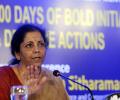
Finance Minister Nirmala Sitharaman criticised commentators who express pessimism about India's demographic dividend, asserting that the country's youth are actively driving economic growth and innovation. She also highlighted the dual nature of AI and the need for robust safeguards in emerging technologies like quantum computing to balance innovation with safety.

BRICS nations have successfully reached a consensus on a joint statement following extensive negotiations, with India playing a crucial role in bridging differences, particularly among West Asian members like Iran, Saudi Arabia, and the UAE, despite regional conflicts and geopolitical tensions.
Commerce Secretary Rajesh Agarwal highlighted the critical need for India to diversify its services exports beyond the dominant IT/ITeS and professional services sectors. Speaking at the Global Fintech Fest 2026, he emphasised the vast potential in the global financial services market, where India currently holds a small share, and stressed how fintech solutions, like UPI, can drive growth, reduce remittance costs, and support MSME trade finance, ultimately leading to sustainable economic expansion.

Amidst ongoing ethnic tensions, a new political alignment in Manipur sees Meitei and Naga groups uniting to demand an update to the National Register of Citizens with a 1951 base year, a move fiercely opposed by Kuki-Zo communities who fear it will disenfranchise them.

A senior Geological Survey of India official warns that the Himalayas are vulnerable to cascading disasters, where one high-altitude event can trigger a chain of destructive events downstream, as evidenced by Nepal's recent floods. He stresses the need for integrated monitoring using satellite data and ground investigations to identify high-risk areas and improve preparedness in the Indian Himalayas.
Professor Philip Maini, an Indian-origin academic at the University of Oxford, is pioneering the application of mathematical biology to understand and develop new cancer therapies. His work focuses on creating models that predict treatment outcomes and developing adaptive therapy strategies to combat drug resistance in tumours, offering a novel approach to improving patient care.
RBI Governor Sanjay Malhotra stated that the central bank consistently views fintechs as 'valuable partners' in shaping India's future financial system, crediting the sector with expanding financial inclusion, enhancing customer experience, and streamlining credit delivery, particularly for MSMEs.
